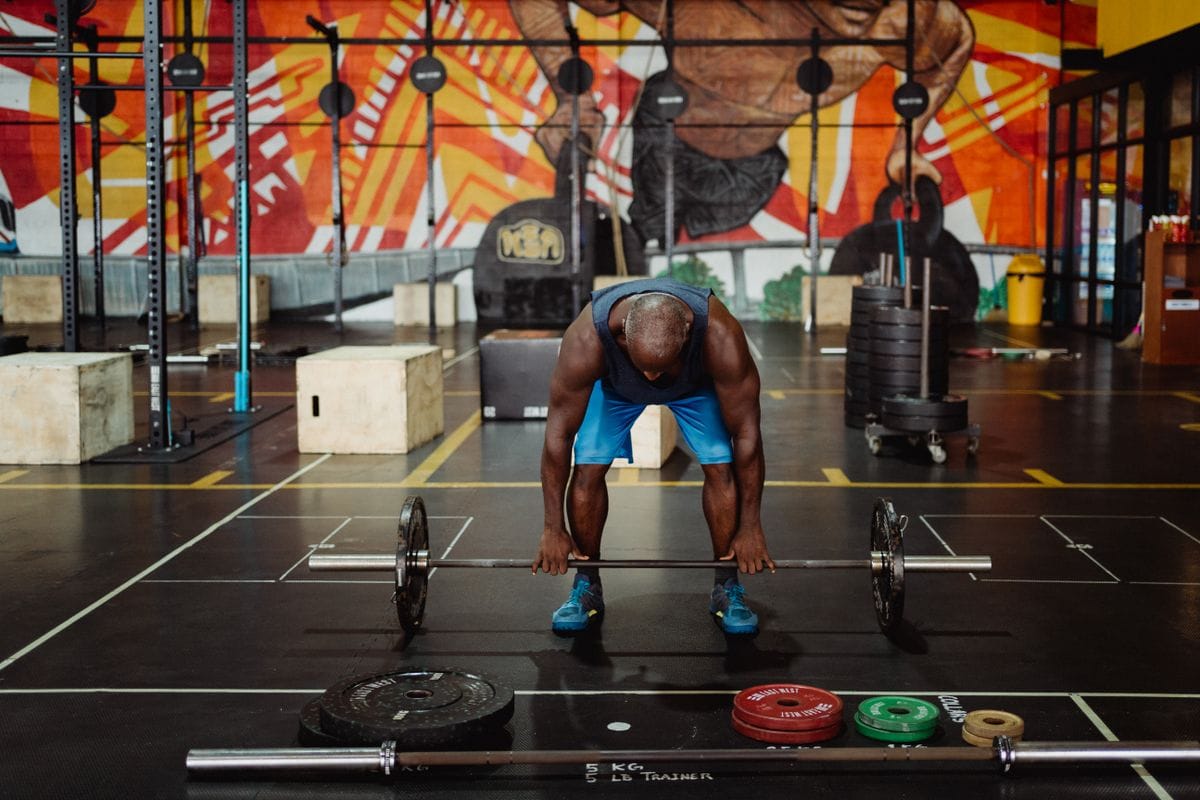
There's a lift that builds more real-world strength than any other, recruits more muscle in one movement than the bench and the curl combined, and carries the worst reputation in the gym for wrecking backs. The deadlift. Most men over 35 have a complicated relationship with it — they either avoid it entirely because a buddy "blew out his back" once, or they pull heavy with a rounded spine and a held breath and become the cautionary tale themselves. Both camps are missing the point. Done right, the deadlift is one of the safest, most protective things you can do for an aging body. Done wrong, it's exactly as dangerous as everyone says.
The reputation comes from ego, not the exercise. Nobody hurts themselves doing a clean, controlled pull at a sensible weight. They hurt themselves chasing a number, yanking a loaded bar off the floor with their lower back doing work their hips and legs should be handling. The fix isn't to avoid the lift. It's to train the pattern that protects your spine for the next forty years.
Why this lift matters more as you age
Past 35, the body quietly loses its posterior chain — the glutes, hamstrings, and spinal erectors that run up the back of you and do the actual work of standing up straight, picking things up, and not throwing your back out lifting a bag of mulch. Desk work accelerates the decline. Those muscles go dormant, the hip hinge gets rusty, and one day you bend over to grab a sock and something twinges. The deadlift is the single best tool for keeping that whole system online. It is, functionally, training your body to safely pick heavy things off the ground — which is the exact movement that injures unprepared people.
Learn the hinge before you touch a barbell
The deadlift is a hip hinge, not a squat and not a back-lift. The motion is your hips traveling backward and forward, with the spine staying neutral and rigid the entire time. Most guys get this wrong because they've never felt the difference.
Spend two weeks here before loading anything heavy. Stand with a dowel or PVC pipe pressed against your back — touching your head, upper back, and tailbone. Push your hips back like you're closing a car door with them, let your knees bend slightly, and keep all three contact points on the dowel the whole way down. If the stick leaves your lower back, you're rounding, and that's the exact position that hurts people. This drill is boring. It's also the difference between deadlifting at 60 and not.
The variation you should actually start with
Forget the bar from the floor for now. The trap-bar deadlift — that hexagonal frame you stand inside of — is where most men over 35 should live. It puts the load at your sides instead of in front of you, which keeps the bar closer to your center of gravity and takes a huge amount of strain off the lower back. It's easier to learn, harder to do badly, and it builds the same posterior chain. A lot of strength coaches now start everyone on the trap bar and only graduate to the straight bar if there's a specific reason. For general strength and a healthy back, you may never need to graduate.
A simple way to program it
- Pull once or twice a week, never on back-to-back days — the lower back needs 48 hours to recover and it'll lie to you about being ready.
- Work in the 5-rep range for strength, not singles. Five clean reps where the last one looks like the first beats one ugly max every time.
- Stop the set the moment your form breaks. A rounded final rep isn't grit, it's the rep that hurts you. Leave it.
- Add weight slowly — 5 to 10 pounds every couple of weeks, not every session. Your tendons and ligaments adapt slower than your muscles, and at 40 that gap is wider than it was at 22.
The honest counterpoint
The deadlift isn't mandatory. If you've got a genuinely cranky back, a history of disc problems, or you just can't groove the hinge without pain after honest practice, there are kettlebell swings, hip thrusts, and Romanian deadlifts that train the same chain with less spinal loading. A good lift you'll actually do beats a great lift that scares you off training. Don't let anyone bully you into a barbell because it's the "real" exercise — the real exercise is whatever keeps you strong and uninjured for decades.
But if your back is healthy and you've been giving this lift a wide berth out of secondhand fear, you're leaving the most useful strength on the table. Start with the dowel drill. Move to the trap bar. Keep the weight honest and the reps clean. The guy who can pull a respectable deadlift at 50 isn't the guy with the bad back — he's the one who spent twenty years building the muscles that prevent it.